
24 October 2025 · filed in Heavy Duty Barriers
Comparing Heavy Duty Barriers with Standard Warehouse Guardrails
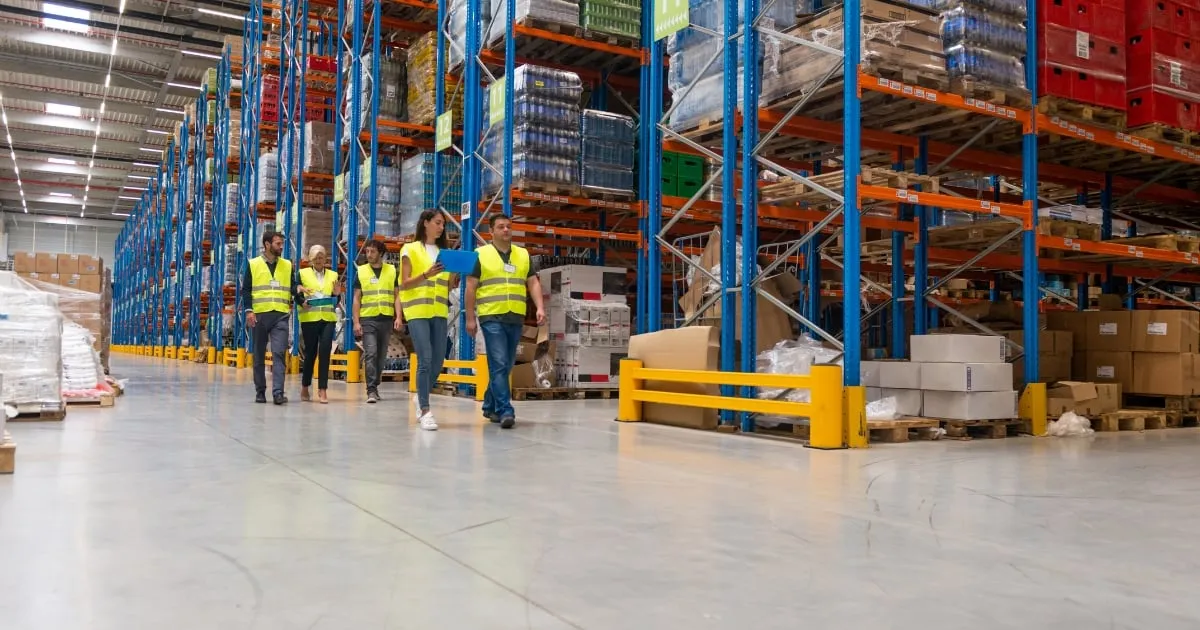
Heavy duty barriers and standard warehouse guardrails both improve safety, but they offer different levels of protection. Heavy duty barriers are built to handle strong impacts from forklifts and other machinery, while standard guardrails mainly guide movement and separate people from equipment zones.
Knowing the difference helps in choosing the right system for your space. Heavy duty barriers suit busy areas with constant vehicle movement or valuable assets nearby. Standard guardrails work best in pedestrian walkways and low-risk sections of the warehouse.
This article compares their design, strength, cost, and performance to help you decide which option fits your safety needs and operational setup.
Why Warehouse Barriers Matter
Barriers are a key part of warehouse safety. They act as physical boundaries that separate people from vehicles and protect structures from accidental collisions. Without them, even a small mistake with a forklift or trolley could cause serious damage or injury.
Standard guardrails are usually installed along walkways to keep pedestrians safe from moving equipment. They act as visual and physical guides, showing where people can walk safely. Heavy duty barriers, in comparison, are designed to take strong impacts from machinery and prevent costly damage to buildings, racking, and vehicles.
Using the right barrier in the right place helps maintain a safe and organised workspace. It reduces the chance of accidents, keeps traffic under control, and ensures that warehouse operations continue without interruptions.
Key Differences Between Heavy Duty Barriers and Guardrails
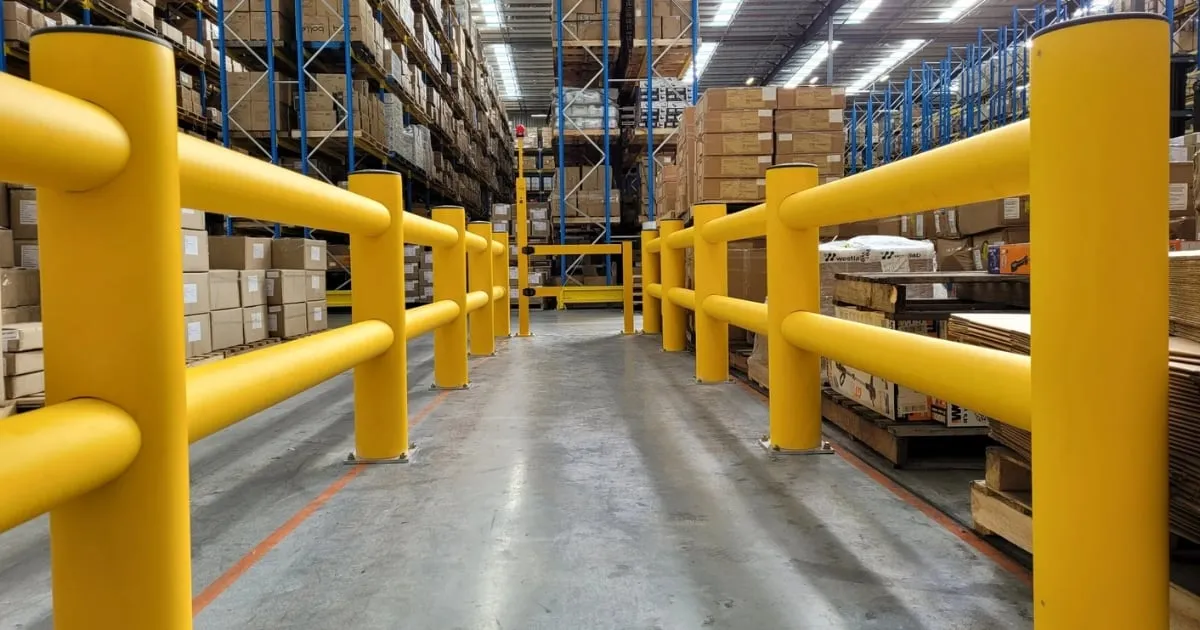
Heavy duty barriers and standard warehouse guardrails may look similar, but they’re built for different purposes. The main difference lies in the level of protection they provide and how they perform under impact.
Heavy duty barriers are made from reinforced steel or high-strength polymers designed to absorb and disperse force. They can handle direct collisions from forklifts and other heavy machinery without bending or breaking. Standard guardrails use lighter materials, making them easier to install and reposition, but they offer less resistance to strong impacts.
Heavy duty barriers also tend to last longer. Because they can withstand repeated collisions, they require fewer repairs or replacements. Guardrails may need attention more often, especially after being hit by moving equipment.
Here’s a quick comparison of the two systems.
| Feature | Heavy Duty Barriers | Standard Guardrails |
| Impact resistance | High, built for collisions with forklifts and heavy equipment | Moderate, protects against light impacts and foot traffic |
| Materials | Reinforced steel or durable polymers | Lighter steel or aluminium |
| Durability | Long-lasting, designed for repeated impacts | May need replacement after strong impacts |
| Installation | More permanent, fixed in place | Easier to install or move |
| Best suited for | Forklift lanes, racking zones, and loading areas | Pedestrian walkways and light traffic sections |
Where Each System Works Best
Each barrier type has its ideal place in a warehouse. The choice depends on how the space is used and what level of protection is needed.
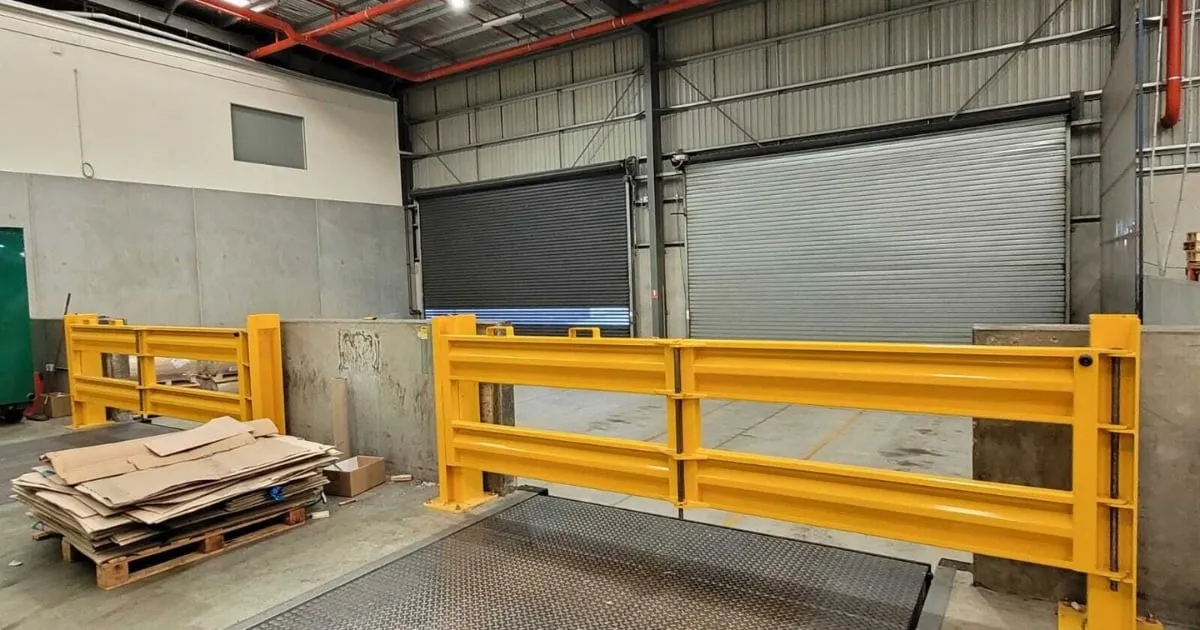
Heavy duty barriers work best in areas with constant forklift traffic, pallet movement, or valuable equipment nearby. They are strong enough to absorb direct impacts and prevent damage to racking, walls, and machinery. These barriers are also suitable for high-risk zones such as loading docks, production lines, and intersections where vehicles move frequently.
Standard guardrails are better suited to low-risk areas. They are often used to separate walkways from work zones, outline pedestrian paths, and protect office spaces within warehouses. Because they are lightweight and easier to reposition, they’re ideal for facilities that change layouts or traffic routes often.
Using both systems together can provide the best overall safety coverage. Heavy duty barriers can protect high-impact zones, while guardrails can clearly define walkways and keep foot traffic organised.
Balancing Cost and Safety
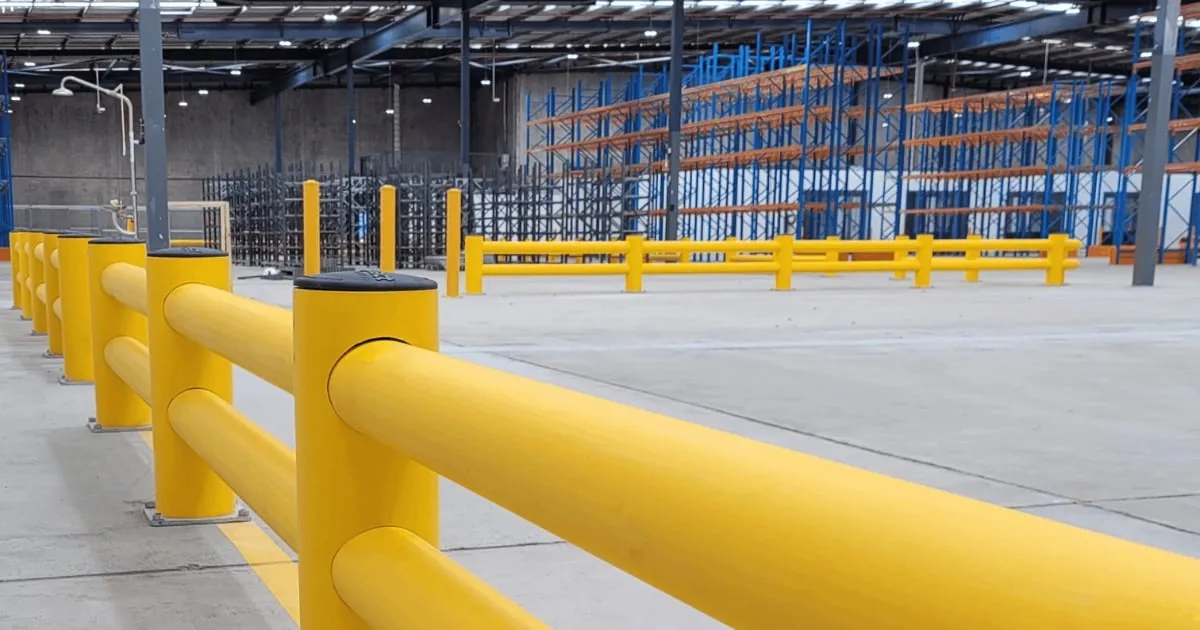
Choosing between heavy duty barriers and standard guardrails often comes down to finding the right balance between cost and protection. While both improve warehouse safety, they differ in upfront price, maintenance needs, and long-term value.
Standard guardrails are generally cheaper to install. They use less material, are lighter to handle, and can be repositioned if layouts change. This makes them ideal for smaller warehouses or low-risk areas where collisions are unlikely.
Heavy duty barriers, on the other hand, cost more initially but provide stronger protection and durability. They can absorb repeated impacts without needing replacement, which helps reduce long-term expenses and downtime. For warehouses with high forklift activity, this durability often makes them the more cost-effective choice over time.
A mixed setup can also work well. Many facilities use heavy duty barriers in high-impact zones and guardrails in lighter traffic areas. This approach keeps costs manageable while maintaining a high level of safety throughout the warehouse.
Making the Right Choice
The decision between heavy duty barriers and standard guardrails should start with a clear look at how your warehouse operates. The type of equipment, level of traffic, and value of nearby assets all influence which barrier works best.
Heavy duty barriers are suited to environments where forklifts and other machinery move constantly or where high-value equipment and structures need extra protection. They’re built to take impact and prevent costly damage.
Standard guardrails are better for low-risk zones such as walkways, staff areas, and office boundaries inside a warehouse. They create clear pathways and maintain safety without the cost of heavy-duty materials.
For many facilities, using both systems together provides the most balanced protection. Guardrails can define safe walking zones, while heavy duty barriers shield machinery, racking, and high-traffic sections. Assessing your layout and traffic patterns helps determine where each system delivers the best results.
Partner with Verge Safety Barriers
Choosing the right safety system is easier with expert advice. Verge Safety Barriers offers both heavy duty barriers and standard guardrails designed to meet different warehouse needs. Each product is built to improve safety, reduce damage, and meet Australian workplace standards.
Their team helps assess site layouts, traffic flow, and risk areas to recommend the most effective setup. Whether your facility needs high-impact protection or pedestrian safety solutions, Verge provides systems that fit your space and compliance requirements.
Contact us to discuss the best options for your warehouse. The right barrier system can protect your people, equipment, and operations for the long term.
Frequently Asked Questions
What makes heavy duty barriers different from standard guardrails?
Heavy duty barriers are stronger and designed to handle direct impacts from forklifts and heavy machinery. Guardrails are lighter and mainly used to guide traffic or separate pedestrian areas.
Are heavy duty barriers worth the higher cost?
Yes. They last longer and require less maintenance, especially in warehouses with constant forklift movement or valuable equipment to protect.
Can both types of barriers be used in the same warehouse?
Yes. Many facilities combine them, heavy duty barriers in high-impact zones and standard guardrails in walkways or low-risk areas.
Do barriers need ongoing maintenance?
Barriers should be inspected during scheduled safety checks. Damage or loose fittings should be repaired immediately to maintain proper protection.
Are Verge barriers compliant with safety standards?
Verge Safety Barriers products are designed to meet Australian workplace safety standards for durability, visibility, and impact resistance.