
2 December 2025 · filed in Mezzanines
How Roll Over Gates Improve Safety on Mezzanines and Elevated Platforms
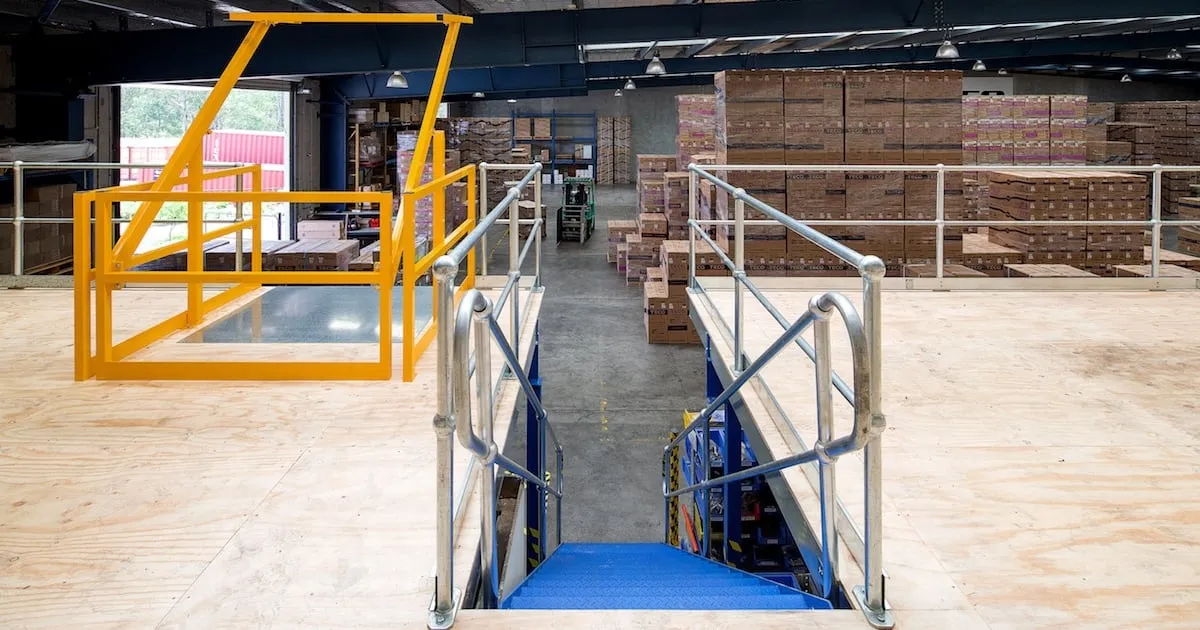
Loading and unloading on elevated platforms creates moments where edges are exposed. When guardrails or temporary gates are moved or left open, a worker can be placed close to an unprotected drop. These situations occur often in warehouses, factories and logistics sites where pallets are handled at height.
Manual gates such as swinging or sliding models rely on workers to close them after each load. In busy environments, this step is easy to miss, leaving an opening that increases the chance of a fall or near-miss.
Roll over gates reduce this risk by keeping one side closed at all times. Their design ensures the edge remains guarded throughout the loading process, helping maintain safer access to mezzanines and raised platforms.
Why Elevated Platforms Need Strong Edge Protection
Mezzanines and raised storage areas increase the chance of falls, especially when workers move between levels or handle pallets at height. Edges become risk points during loading because pallets, forklifts and workers often interact in tight spaces.
During busy periods, workers may remove or open a gate to accept a load and forget to replace the barrier. Even a short lapse can leave an exposed edge where a misstep, trip or backward movement could lead to serious injury.
Forklifts also contribute to risk. When lifting pallets to higher levels, operators may not see workers standing near the edge, making consistent barrier coverage essential. Strong edge protection helps prevent contact, falling objects and unguarded openings.
How Roll Over Gates Work
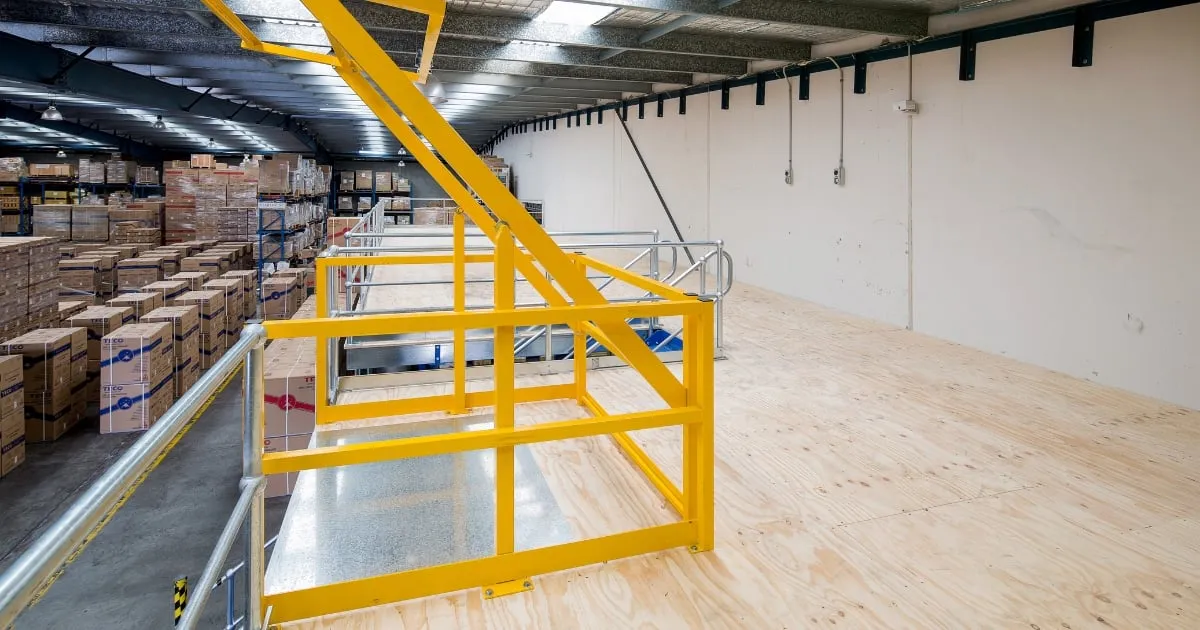
A roll over gate uses a linked, pivoting frame that moves between two fixed positions. When the outer side opens to allow a pallet to be placed on the mezzanine, the inner side closes automatically. This blocks the edge and keeps workers separated from the drop.
Once the pallet is secure, the gate rolls over and reverses positions. The inner side opens for access, and the outer side closes to protect the platform during unloading. At no point can both sides be open at once, which removes the risk of an unguarded edge.
Many workplaces choose a roll over gate when they need a system that maintains consistent guarding without relying on manual resets. Balanced pivots or counterweights make the movement smooth and reduce strain during repeated handling tasks.
Key Safety Advantages of Roll Over Gates
Roll over gates provide continuous edge protection throughout loading and unloading. Because one side is always closed, workers are never exposed to an open edge while handling pallets or moving across the platform.
This design removes the reliance on workers remembering to close a gate after receiving a load. In busy warehouses, reducing manual steps helps lower the chance of a gate being left open during shift peaks or rapid handling tasks.
Lower panels and enclosed sections help prevent loose items from slipping off the platform, supporting safer conditions around forklifts and foot traffic.
Their consistent operation suits areas with frequent pallet movement, where predictable guarding is essential.
Meeting Australian Safety Requirements
Australian standards require elevated platforms to remain guarded at all times, including during loading. AS 1657:2018 and SafeWork NSW guidelines specify that any opening on a mezzanine must use a system that prevents exposure to a fall.
Roll over gates meet these requirements by keeping one side closed throughout the loading cycle. This removes the risk of an unguarded edge and supports compliance without adding extra steps for workers.
Using equipment that maintains continuous protection also helps improve audit outcomes and demonstrates effective control of height-related risks.
Workflow and Operational Benefits
Roll over gates support smoother handling by allowing pallets to move between levels without removing or repositioning barriers. Workers can receive or unload pallets while the edge stays protected, reducing interruptions and keeping tasks moving at a steady pace.
Because the gate alternates automatically between positions, there is no need to reset the system after each load. This helps prevent delays during peak periods or rapid handling cycles.
Lower panels and enclosed sections help prevent smaller items from falling to lower levels. The design suits high-use areas where consistent protection and efficient workflow are both essential.
Installation and Maintenance
Roll over gates can be fitted to most mezzanines without major structural changes. They connect to standard guardrails, making them suitable for upgrades where existing systems need to be replaced.
The pivoting mechanism uses fewer moving parts than sliding or swing gates, reducing the chance of jamming or uneven wear. This helps lower maintenance demands and supports reliable performance.
Facilities with multiple levels can install several units to maintain consistent guarding across all access points. When maintained correctly, these systems support long-term safety for elevated platforms.
Why Choose Safety Barriers Sydney
Roll over gates provide reliable edge protection for mezzanines and raised platforms, supporting safer handling and smoother movement during daily operations. Their linked design keeps one side closed at all times, which helps prevent falls and supports Australian safety requirements.
Safety Barriers Sydney supplies systems suited to warehouses, factories and logistics sites that manage frequent pallet movement. Our team offers guidance on selecting and installing equipment that helps maintain consistent guarding on raised work areas.
If your workplace needs dependable protection for elevated platforms, we can help you assess options that support safer access and stronger control around mezzanine edges.
FAQs
Where are these gates most effective?
They are commonly used at pallet drop zones, raised storage areas and other access points that require controlled movement and consistent guarding.
Do they reduce the need for extra spotters?
Yes. Because the edge remains guarded automatically, fewer manual checks are required during loading.
How do they support forklift operators?
The design creates a predictable loading point, helping reduce blind-spot risks when operators lift or lower pallets.
Can they help guide foot traffic?
Yes. The closed side directs people away from the handling area, helping separate walkway movement from pallet access.
Are they suitable for different pallet sizes?
Most units accommodate a range of pallet shapes because the guarding remains in place regardless of load height or width.
Do they require power to operate?
No. Balanced pivots or counterweights allow smooth operation without electrical components.