
16 September 2025 · filed in V Gates
How V Gates Improve Safety Between Pedestrians and Forklifts
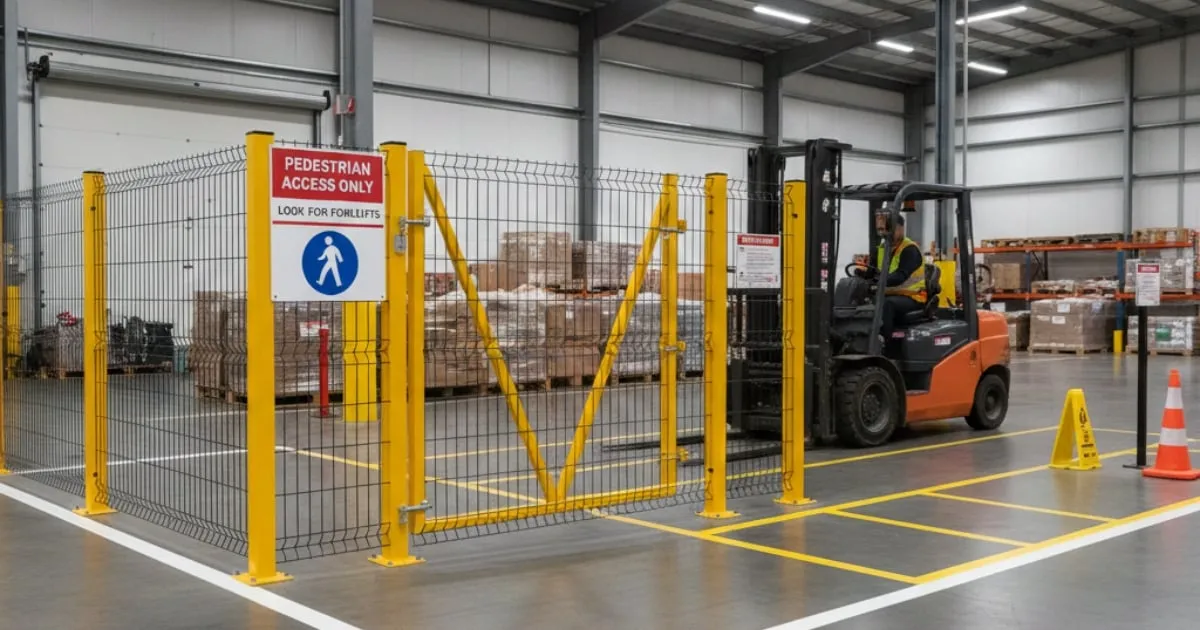
Pedestrians and forklifts often move through the same areas in warehouses and industrial sites. This shared movement increases the chance of incidents, particularly in locations where visibility is limited or where workers may be focused on tasks rather than approaching vehicles.
When walkways are not controlled, both pedestrians and operators rely on assumptions about each other’s movements. This leads to gaps in safety that make incidents more likely. Simple distractions or blind spots can quickly become serious risks in these environments.
V gates create a defined access point that helps manage how people enter forklift areas. A required decision point supports safer movement and helps facilities maintain predictable traffic flow between pedestrians and mobile equipment.
Why Separation Matters in Mixed-Traffic Facilities
Forklifts and pedestrians often move through the same areas, which increases the chance of incidents when visibility is limited or when operators are carrying loads. Pedestrians may also enter forklift paths while focused on tasks, making it harder for operators to react in time.
When access points are not controlled, both groups rely on assumptions about each other’s movements. This creates uncertainty and contributes to unsafe situations in aisles, loading zones, and high-traffic work areas.
Introducing a defined crossing point helps reduce these risks. It encourages pedestrians to pause and assess vehicle movement before entering. For operators, predictable access points make it easier to maintain awareness and adjust speed safely.
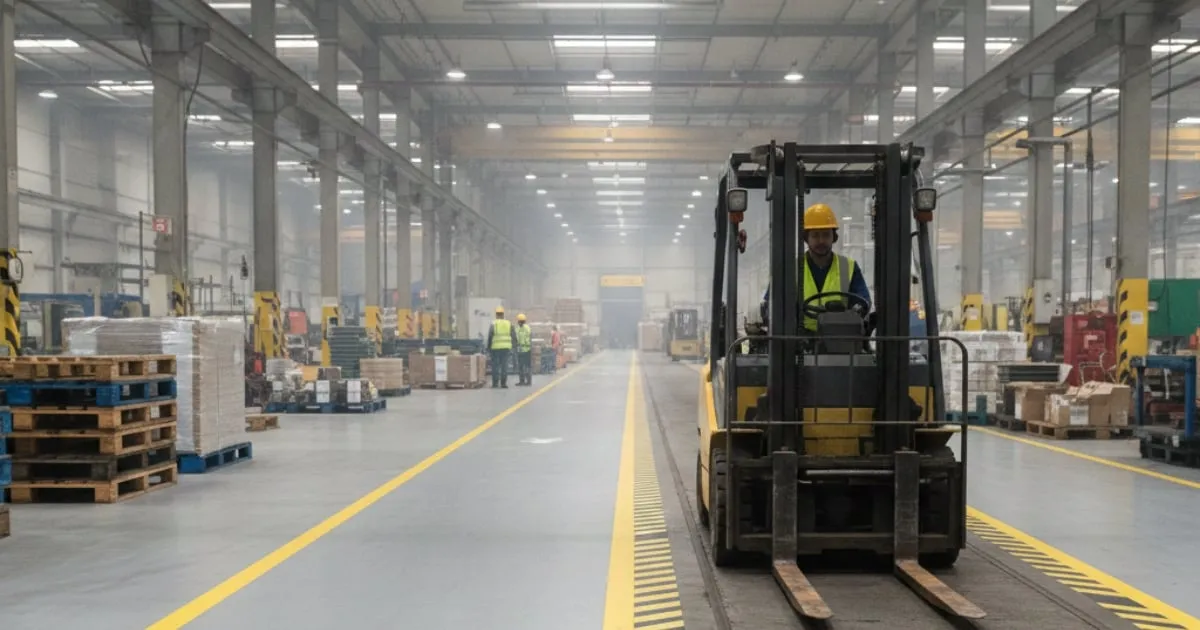
What V Gates Are and How They Function
V gates are physical access control points designed to manage how pedestrians enter areas where forklifts operate. Their angled, V-shaped layout directs people toward one controlled entry zone, creating a natural pause before reaching a shared traffic area. This shape encourages pedestrians to approach from a clear and predictable direction.
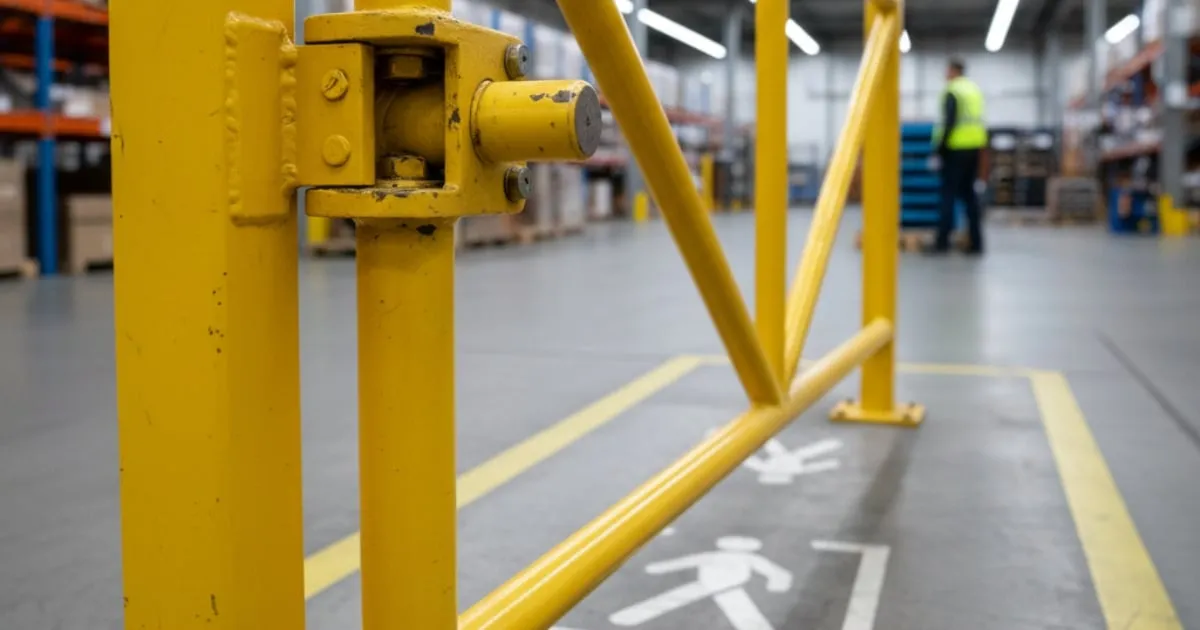
Most V gates use steel or aluminium construction with powder-coated finishes for visibility and impact resistance. They open smoothly and suit installations that include barriers, handrails, and marked walkways. Facilities seeking more information on available systems can review the v-gate used in many industrial environments.
The controlled approach created through a V gate supports safer decisions. Pedestrians gain a moment to check for vehicle movement, while operators can monitor a consistent point where crossings occur.
Design Features That Improve Workplace Safety
V gates use a simple structure designed to support safer movement in mixed-traffic areas. Their angled layout directs pedestrians toward a controlled access point, helping reduce unexpected entry into forklift paths. The frame often uses steel or aluminium, providing strength in areas exposed to constant activity.
Powder-coated finishes improve visibility, which is important in warehouses that rely on clear visual cues. Smooth hinges allow workers to move through the gate without difficulty, supporting consistent use across shifts.
These gates also suit a wide range of layouts. They can connect to handrails, barriers, and marked walkways, forming a complete access system that matches existing site conditions. These elements help workplaces maintain predictable movement and reduce unnecessary risks.
Supporting WHS and Australian Standards
Workplaces in Australia must follow strict WHS requirements that focus on reducing risks where pedestrians and mobile equipment operate in the same area. Physical controls play an important role in meeting these expectations, as they help limit unsafe movement and support more predictable traffic patterns.
V gates contribute to these requirements through defined access points. A controlled entry helps workers stop, assess vehicle movement, and enter only when safe. This supports risk management duties outlined in WHS guidance, which highlight the need for clear separation between people and vehicles.
These gates also help limit errors that occur when workers assume an area is clear. A structured access point encourages safer habits and improves awareness in zones with forklift activity.
Practical Benefits in Busy Industrial Workplaces
V gates help improve movement in areas where pedestrians and forklifts operate throughout the day. A controlled access point reduces unexpected crossings, which supports smoother traffic flow during busy periods. This is useful in warehouses, loading zones, and production areas where workers and vehicles often move through shared spaces.
Clear entry points also help reduce congestion. When pedestrians use one defined path, operators can anticipate where people will appear, making it easier to adjust speed and maintain awareness. This supports safer work habits and helps limit delays.
V gates also suit facilities of different sizes. They can be installed in narrow aisles, open loading docks, or along marked walkways, giving workplaces flexibility when improving access control in high-activity areas.
Long-Term Advantages of Installing V Gates
V gates help workplaces reduce incidents over time through controlled access and clearer movement patterns. When crossings occur at one defined point, the chance of unexpected interaction decreases, which supports fewer disruptions and fewer safety-related delays. This can contribute to lower insurance costs and more consistent operations.
Workers also develop safer habits when access points are structured. A required pause before entering a forklift area helps reinforce awareness, especially in environments with constant activity. This leads to stronger confidence among staff and more predictable behaviour across shifts.
V gates also form part of long-term planning for traffic management. When combined with training, marked walkways, and other physical controls, they create a safer environment for people completing tasks in busy facilities.
V-Gate Solutions from Safety Barriers Sydney
Safety Barriers Sydney provides access control systems designed for workplaces that manage pedestrian and forklift movement in the same areas. Our V-gate solutions support clearer traffic flow, improve decision points, and help reduce risks in high-activity zones. Each system can be matched to existing walkways, barriers, and site layouts to support effective movement around forklifts.
For workplaces aiming to strengthen safety controls and meet WHS expectations, V gates offer a practical option that supports safer habits and more predictable movement across shifts.
Contact Safety Barriers Sydney for more information on V-gate systems suitable for industrial environments.
FAQs
Where are these access gates most useful in a facility?
They are commonly installed at walkway entry points, aisle crossings, and areas where workers transition into zones with vehicle activity.
Are they suitable for compact or narrow work areas?
Yes. Their angled layout fits well in smaller aisles and confined walkways where movement needs clearer control.
Do they help workers manage visibility issues around moving equipment?
They encourage workers to approach from predictable angles, which supports safer decisions in areas with limited visibility.
Can these gates be used near loading docks?
Yes. They can guide workers toward a controlled entry point in locations where vehicles often turn or reverse.
Can they form part of a broader safety system?
They can connect with handrails, barriers, and marked walkways to create a more complete access control setup.
How durable are they in active work environments?
Most use steel or aluminium with protective finishes that support long-term performance.