
27 February 2024 · filed in Product Highlight
Working with Bollards: Securing Pathways in Industrial Spaces
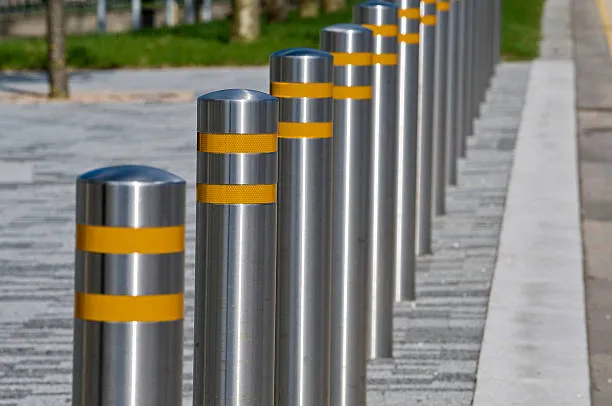
Managing industrial spaces isn’t just about keeping the wheels turning; it’s also about keeping the team safe, especially when vehicles and heavy machinery are part of the daily hustle. Like many Aussies, we understand that safety is no accident, it’s a deliberate choice. Surprisingly, nearly half of workplace mishaps could be dodged if proper safety measures were put in place. Our comprehensive guide unpacks how bollards can play a legendary role in beefing up security and protecting walkways with real effectiveness. Have a squiz at our insights for steps towards a safer tomorrow!
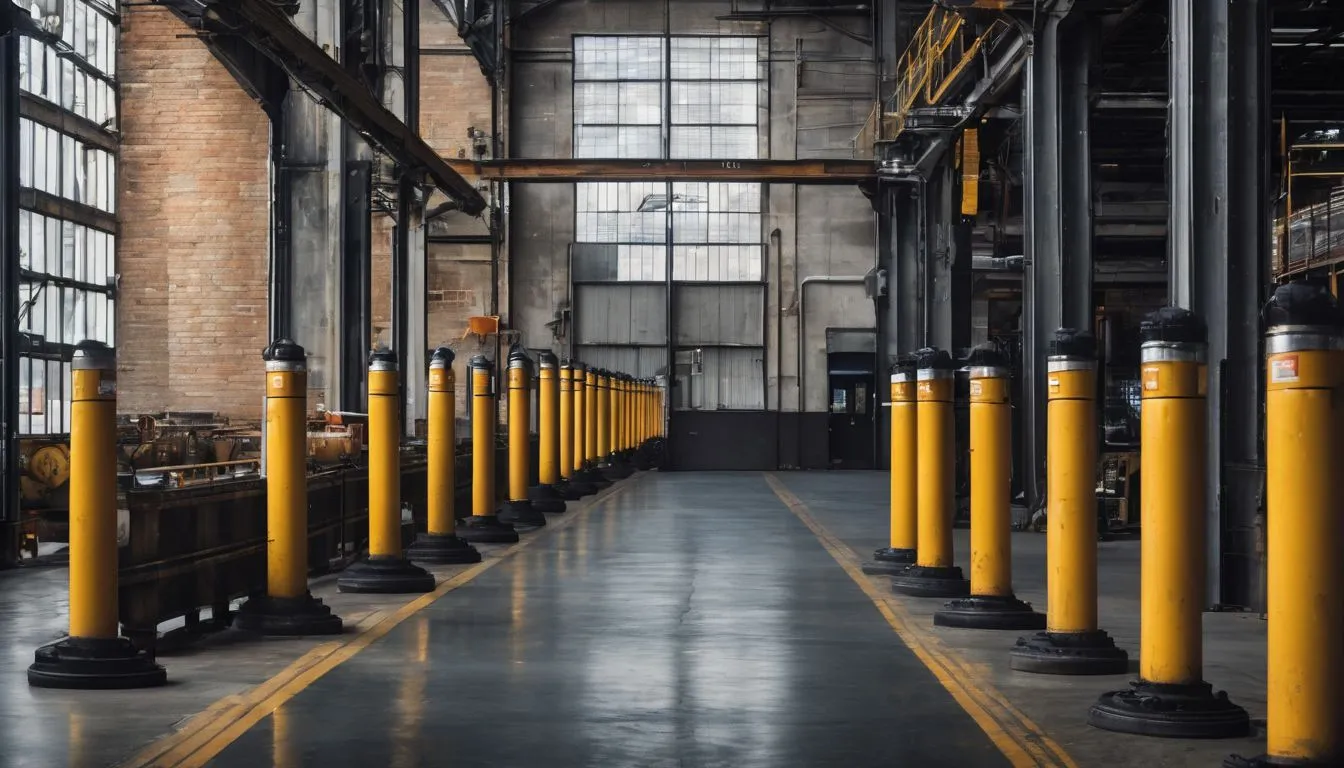
Understanding Industrial Safety Bollards
Industrial safety bollards are essential components in industrial spaces, providing a physical barrier to protect against accidents and define boundaries. They come in various types and are made up of sturdy materials designed for durability and reliability.
What are industrial safety bollards?
We see industrial safety bollards as robust vertical posts strategically stationed around facilities to safeguard against accidental vehicle collisions and to define pedestrian areas.
They act as security barriers, offering a physical line of defence for property, personnel, and visitors in various settings like warehouses and manufacturing plants. Their solid construction is designed specifically to withstand significant impacts, thereby protecting infrastructure from potential damage.
Bollards serve multiple purposes; they not only enhance workplace safety by creating visible boundaries but also contribute to traffic management within the site. Whether installed at entry points or along walkways, these barrier solutions effectively control vehicular access while ensuring the smooth flow of foot traffic.
Prioritising hazard prevention, bollards are essential components in maintaining operational efficiency and securing pathways in industrial spaces.
Components of industrial bollards
Industrial bollards are composed of different components that work together to provide effective protection and safety. These components include:
- Durable Materials: Industrial bollards are made from strong materials such as steel, concrete, or high-impact plastic to withstand heavy impact and harsh environmental conditions.
- Reflective Tape: Many industrial bollards are equipped with reflective tape to enhance visibility at night or in dimly lit areas, reducing the risk of accidents.
- Mounting Hardware: Each industrial bollard is secured in place using heavy-duty mounting hardware, ensuring stability and resistance against external forces.
- Finish Options: Bollards come in various finishes like powder coating or galvanisation to protect against corrosion and maintain a professional appearance.
- Warning Signage: Some industrial bollards feature integrated warning signage to alert pedestrians and drivers of potential hazards or restricted areas.
- Impact Resistance Features: Certain bollard designs incorporate features such as energy-absorbing mechanisms or flexible materials to minimise damage in the event of a collision.
- Accessibility Enhancements: Wheelchair ramps or removable sections can be incorporated into certain industrial bollard designs, promoting accessibility while maintaining security protocols.
- Customisable Options: Industrial bollard manufacturers offer customisation options for size, shape, colour, and additional features to tailor the protection to specific site requirements.
Types of industrial bollards
When it comes to industrial bollards, there are various types available to cater to different safety and security needs. Here are the different types of industrial bollards used in industrial spaces:
- Fixed Bollards: These sturdy bollards are permanently installed and provide reliable protection against vehicle impacts, making them ideal for perimeter security.
- Removable Bollards: Designed for flexibility, these bollards can be easily removed to allow temporary access or repositioning as needed without compromising security.
- Flexible Bollards: Made from materials such as rubber or plastic, these bollards offer impact resistance while being able to bend upon impact, reducing damage to vehicles and structures.
- Lighted Bollards: Equipped with lighting elements, these bollards improve visibility in low-light conditions, enhancing safety for both pedestrians and drivers.
- Retractable Bollards: Controlled electronically or manually, these bollards can be raised or lowered as required, providing flexible access control for entrances and walkways.
- Decorative Bollards: Combining aesthetic appeal with functional security, these bollards add an element of design while still providing effective site protection.
The Benefits of Bollards in Industrial Spaces
Bollards in industrial spaces offer numerous benefits, including increased security and safety measures, protection against vehicle accidents, and the ability to define boundaries and control access.
These barriers play a crucial role in maintaining the safety of workers and visitors within an industrial setting.
Increase security and safety
To increase security and safety in industrial spaces, we install durable bollards that act as protective barriers. These bollards are designed to prevent unauthorised vehicle access, creating a secure environment for pedestrians and workers.
By strategically placing bollards around the perimeter of the facility, potential threats and accidents can be mitigated, promoting a safer working environment for everyone.
The use of industrial safety bollards also serves as a visual guide for drivers and pedestrians within the premises. This ensures that pathways are clearly demarcated, reducing the risk of collisions or unauthorised entry into restricted areas.
Implementing these measures provides peace of mind while maintaining an efficient flow of traffic throughout the site.
Protect against vehicle accidents
Installing industrial safety bollards can effectively prevent vehicle accidents in your facility. By strategically placing bollards along pathways and around sensitive areas, you can create a protective barrier that mitigates the risk of vehicles colliding with structures or endangering pedestrians.
This not only enhances safety but also minimises the potential for costly damage to buildings and equipment, contributing to a secure and productive working environment.
Carefully positioned bollards act as a visual guide for drivers, preventing accidental incursions into pedestrian zones and designated work areas. Additionally, they provide an added layer of security against unauthorised vehicular access, helping business owners maintain control over traffic flow within their premises while safeguarding employees and visitors from potential harm.
Define boundaries and control access
Bollards help define boundaries and control access in industrial spaces. They create clear pathways, separating pedestrian walkways from vehicular traffic to enhance safety. By strategically positioning bollards, business owners can guide the flow of people and vehicles within their facilities, reducing the risk of accidents and ensuring efficient traffic management.
Properly installed bollards also act as a visual deterrent, signalling restricted areas and preventing unauthorised vehicle access. This proactive measure reinforces security protocols while safeguarding against potential breaches or unwanted intrusions into sensitive zones within the industrial setting.
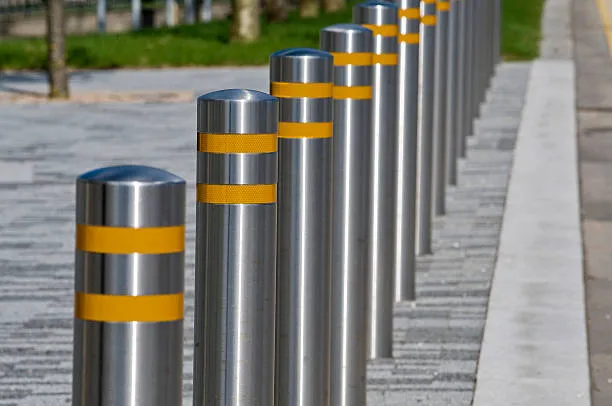
Proper Spacing and Site Planning for Bollards
When it comes to installing bollards in industrial spaces, proper spacing and site planning are crucial for effective security and safety measures. Read on to learn about the importance of these factors and how they can make a difference in your facility’s protection.
Importance of proper spacing
Proper spacing of industrial safety bollards is crucial for effective protection. We must consider pedestrian traffic flow and vehicle access when determining the placement of bollards.
Incorrectly spaced bollards can lead to reduced effectiveness, hindering their ability to prevent accidents and protect people and property.
Careful consideration should also be given to the distance between each bollard, ensuring that they provide continuous and comprehensive coverage. Inadequate spacing may create gaps in security, compromising the overall safety measures put in place.
Factors to consider in site planning
When planning the site for bollard installation in industrial spaces, we need to consider several important factors:
- Traffic flow patterns within the facility to ensure that bollards are strategically placed to control vehicular access and protect pedestrian walkways.
- The specific areas of the facility that require protection from potential vehicle impact, such as loading docks, machinery, or building entrances.
- Accessibility requirements for emergency vehicles and service vehicles, ensuring that the bollards do not impede necessary access while still providing security.
- The location of utilities and other infrastructure underground to avoid interference during installation and maintenance of the bollards.
- Compliance with local regulations and guidelines regarding bollard placement and safety standards to ensure legal adherence and liability protection.
- Consideration of future expansion or changes in layout to accommodate flexibility in bollard placement without compromising overall safety measures.
Examples of bollard installation
When installing bollards, it is crucial to consider their placement and purpose. Here are some key examples of bollard installation:
- In warehouse facilities, bollards can be strategically placed at loading bays to protect against accidental collisions from forklifts and other heavy machinery.
- Installing bollards around pedestrian walkways helps prevent vehicle encroachment, ensuring the safety of employees and visitors within industrial spaces.
- Bollards placed at building corners provide protection against accidental vehicle impacts, safeguarding the structure from potential damage.
- Securing access points with bollards helps control vehicular traffic flow and prevents unauthorised entry into restricted areas within industrial premises.
- In outdoor storage spaces, installing durable bollards creates a barrier to safeguard inventory and equipment from potential vehicle damage.
Different Types of Bollards and Their Uses
From decorative bollards for community spaces to crash-rated bollards for high-security areas, there are various types of bollards that serve different purposes. Understanding these variations can help in choosing the right type of bollard for specific industrial needs.
Decorative bollards for community spaces
Decorative bollards are an attractive and functional addition to community spaces, enhancing both aesthetic appeal and safety. They come in a variety of designs, making it easy to find options that complement the surrounding environment.
Placing decorative bollards strategically can help define pedestrian areas, protect outdoor seating zones, and prevent vehicle encroachment while adding a touch of style. Incorporating these bollards into public spaces can also bolster a sense of community pride and ownership.
Moreover, installing decorative bollards aligns with safety standards without compromising on visual charm. By implementing creatively designed barriers in communal settings, business owners can achieve a balance between aesthetics and security measures within their premises.
Crash-rated bollards for high-security areas
Crash-rated bollards provide a robust security solution for high-risk sites, effectively preventing unauthorised vehicle access and potential threats. These heavy-duty barriers are engineered to withstand high-velocity impacts and can be installed in sensitive areas such as government buildings, military bases, and critical infrastructure facilities.
The crash rating ensures that the bollards offer reliable protection against aggressive vehicle attacks while maintaining pedestrian safety within the secured perimeter.
Business owners can trust crash-rated bollards to fortify their premises against hostile vehicular intrusion, offering peace of mind and safeguarding valuable assets. By strategically placing these formidable barriers around vulnerable entry points, businesses can proactively mitigate risks and reinforce their overall security posture while complying with safety regulations.
Speed humps for traffic management
Transitioning from high-security areas to the management of traffic on your industrial site, speed humps play a crucial role in ensuring the safety of both pedestrians and vehicles.
Implementing strategically placed speed humps helps to regulate vehicle speeds, reducing the risk of accidents and near-misses within your facility. By incorporating these traffic calming measures, you can effectively mitigate the potential hazards posed by fast-moving vehicles and promote a safer working environment for all staff members and visitors.
Speed humps are designed to slow down vehicular traffic, enhancing visibility signals for pedestrian walkways while minimising the chances of collisions. Properly installed speed humps act as an effective deterrent against excessive speeding, helping to maintain order on pathways within your industrial space.
Innovations in Bollard Technology
Innovations in bollard technology have led to the development of lit bollards for better visibility, recycled plastic bollards for eco-friendliness, and strong and durable handrail systems.
These advancements provide more options for businesses to enhance safety and security in their industrial spaces.
Lit bollards for better visibility
Lit bollards use integrated lighting to improve visibility, particularly in low-light conditions. This feature enhances safety and security in industrial areas, reducing the risk of accidents.
Business owners can benefit from the increased visibility offered by lit bollards, providing a clear delineation of pathways and potential hazards.
When installed strategically, lit bollards act as an additional visual guide for employees and visitors, helping them navigate through the premises safely. The improved visibility also contributes to overall site security, deterring unauthorised access and enhancing surveillance effectiveness.
Recycled plastic bollards for eco-friendliness
Transitioning from the enhanced visibility provided by lit bollards, recycled plastic bollards offer an eco-friendly alternative to traditional materials. Using recycled plastics helps reduce the environmental impact of manufacturing while providing durable and reliable safety barriers.
These bollards are resistant to rust and corrosion, making them ideal for outdoor use in industrial settings where they can contribute to sustainable practices and waste reduction efforts.
Recycled plastic bollards also demonstrate a commitment to corporate social responsibility by repurposing materials that would otherwise end up in landfills. By integrating these eco-friendly barriers into facility protection plans, business owners can not only enhance safety but also showcase their dedication to sustainable solutions for risk mitigation within their industrial spaces.
Strong and durable handrail systems
Transitioning from eco-friendly solutions to industrial safety, we turn our focus to strong and durable handrail systems. These robust structures provide crucial support and guidance in high-traffic areas, effectively preventing accidents and ensuring the safety of both employees and visitors.
Engineered for resilience, these handrail systems are designed to withstand heavy-duty usage while offering stability and peace of mind in industrial settings.
When choosing a handrail system, it is essential to consider the materials used and their ability to endure harsh environments. Stainless steel, galvanised steel, or aluminium handrails are popular choices due to their durability and resistance against corrosion.

Conclusion
We’ve explored the important role industrial safety bollards play in securing pathways within industrial spaces. The strategies and tips provided are practical, easy to implement, and efficient, offering reassurance to business owners looking to enhance safety. Emphasising the significance of this topic is crucial as it can lead to significant improvements in warehouse safety and vehicle access control. For further learning and engagement, consider exploring additional resources or services tailored to your specific needs. Let’s take action by prioritising pathway protection through effective bollard installation and security measures for a safer industrial environment.